Sri Lankan Home Cooking

Sri Lankan Cooking Without Vegetable Oil

Six recipes drawn from the island's rice and curry table, built the way southern Sri Lankan kitchens have always built them: on coconut oil, coconut milk, roasted spice, and nothing poured from a plastic jug.

6 Original Recipes
0 Vegetable Oil
100% Coconut, Ghee & Spice
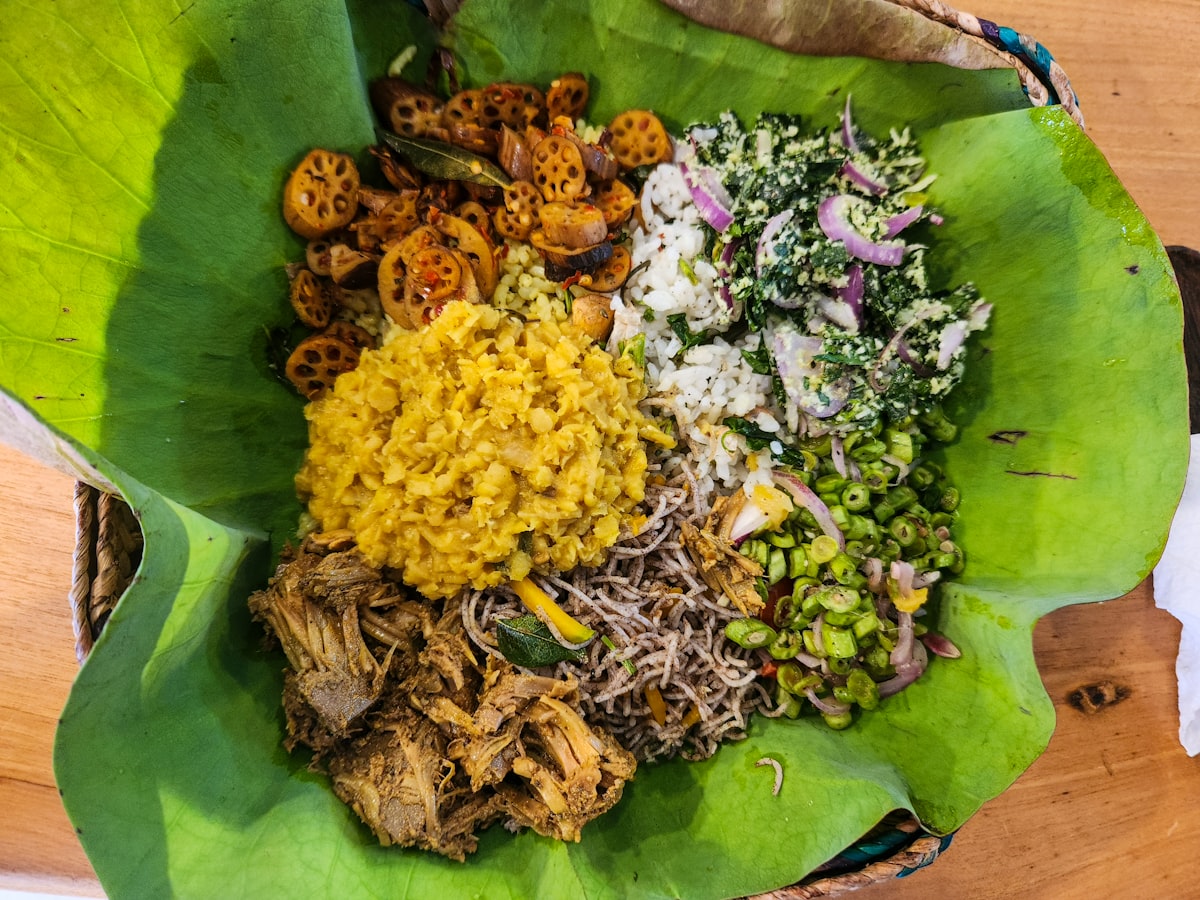
Traditional Sri Lankan rice and curry spread served on a lotus leaf, with dhal, mallum, meat curry, and sambol
Pol

Coconut First

Coconut oil for the pan, coconut milk for the gravy, fresh grated coconut for texture. It is the fat and the body of Sri Lankan cooking, never a neutral jug of vegetable oil.

Karapincha

Curry Leaves First In

Mustard seed and fresh curry leaves go into hot coconut oil before anything else touches the pan. That first sizzle, the tempering, is what a Sri Lankan curry is built on.

Badapu

Spice Is Roasted, Not Raw

Curry powder is dry roasted dark in a pan before it is ground. That single step, patient and unhurried, is what separates a southern curry from a shortcut one.

The Recipes

Six Dishes From the Rice and Curry Table

A meat curry, a seafood curry, a vegetable mallum, a lentil dhal, a griddle bread, and a steamed pudding. Every one of them cooked on coconut oil, coconut milk, or ghee.

Ingredients

  • 2 lb pork shoulder, cut into large cubes
  • 3 tbsp coconut oil
  • 1 cup grated coconut, dry roasted until dark brown
  • 2 tbsp roasted curry powder
  • 1 cinnamon stick
  • 8 curry leaves
  • 4 cloves garlic, crushed
  • 1 inch piece ginger, sliced
  • 2 tbsp tamarind pulp
  • 2 dried red chilies
  • Salt, to taste

Method

  1. Dry roast the grated coconut in a heavy pan over low heat, stirring constantly, until it turns near black. Set it aside.
  2. Heat the coconut oil in a clay pot or heavy pot. Add the curry leaves, cinnamon, and dried chilies, and let them sizzle for thirty seconds.
  3. Add the garlic and ginger and cook until fragrant, about one minute.
  4. Add the pork and sear it on all sides over high heat.
  5. Stir in the roasted curry powder and roasted coconut, coating the meat evenly.
  6. Add the tamarind pulp and a splash of water, cover, and simmer on low heat for about ninety minutes, until the pork is tender and the sauce has reduced to a thick, dark coating.
  7. Season with salt, rest for ten minutes, and serve with steamed rice.

Ingredients

  • 2 whole crabs, cleaned and cut into pieces
  • 3 tbsp coconut oil
  • 1 onion, sliced
  • 3 cloves garlic, minced
  • 1 inch ginger, minced
  • 2 tbsp roasted curry powder
  • 1 tsp turmeric
  • 1 sprig curry leaves, plus 1 piece pandan leaf
  • 1 1/2 cups coconut milk
  • 2 green chilies, split
  • Salt, to taste

Method

  1. Heat the coconut oil in a wide clay pot and fry the onion until soft and golden.
  2. Add the garlic, ginger, curry leaves, and pandan, and cook for one minute until fragrant.
  3. Stir in the curry powder and turmeric, toasting the spices for thirty seconds.
  4. Add the crab pieces and toss to coat them in the spice paste.
  5. Pour in the coconut milk, add the green chilies, and bring to a gentle simmer.
  6. Cover and cook for twenty minutes, turning the crab once, until the shells turn bright orange and the gravy thickens.
  7. Season with salt and serve immediately with plain rice or hoppers.

Ingredients

  • 4 cups gotukola leaves (or baby spinach), finely shredded
  • 1 cup fresh grated coconut
  • 1 small red onion, finely chopped
  • 2 green chilies, finely chopped
  • 1 tsp turmeric
  • 1 tbsp lime juice
  • 1 tsp coconut oil
  • 1/2 tsp mustard seeds
  • 4 curry leaves
  • Salt, to taste

Method

  1. Wash the leaves well and shred them very finely with a sharp knife.
  2. In a bowl, combine the shredded leaves with the grated coconut, onion, and green chilies.
  3. Sprinkle in the turmeric and toss until every strand is lightly colored.
  4. Warm the coconut oil in a small pan, add the mustard seeds and curry leaves, and let them pop for a few seconds.
  5. Pour the sizzling oil over the salad and toss quickly to combine.
  6. Finish with lime juice and salt, tossing once more just before serving.
  7. Serve immediately alongside rice and curry, while the coconut is still fresh.

Ingredients

  • 1 cup red lentils, rinsed
  • 2 1/2 cups water
  • 1 cup coconut milk
  • 1/2 tsp turmeric
  • 1 onion, finely chopped
  • 2 cloves garlic, crushed
  • 1 green chili, split
  • 8 curry leaves
  • 1 tbsp coconut oil
  • 1/2 tsp mustard seeds
  • Salt, to taste

Method

  1. Bring the lentils, water, and turmeric to a boil in a pot, skimming off any foam.
  2. Lower the heat and simmer for fifteen minutes, stirring occasionally, until the lentils soften and break down.
  3. Add half the onion, the garlic, and the green chili, and continue simmering for ten minutes.
  4. Stir in the coconut milk and simmer gently for five more minutes without letting it boil hard.
  5. In a small pan, warm the coconut oil and pop the mustard seeds with the curry leaves and remaining onion until golden.
  6. Pour the tempering over the dhal and stir it through.
  7. Season with salt and serve warm as part of a rice and curry plate.

Ingredients

  • 2 cups rice flour
  • 1 cup coconut milk
  • 1 cup warm water
  • 1 tsp active dry yeast
  • 1 tsp sugar
  • 1/2 tsp salt
  • 4 eggs
  • Coconut oil, for greasing the pan
  • Salt and pepper, for topping

Method

  1. Dissolve the yeast and sugar in the warm water and let it sit for ten minutes until foamy.
  2. Whisk the rice flour, coconut milk, and yeast mixture into a smooth, thin batter.
  3. Cover and let the batter ferment at room temperature for at least eight hours, or overnight.
  4. Season the batter with salt, then heat a small, rounded hopper pan over medium heat and brush it lightly with coconut oil.
  5. Pour a ladle of batter into the center and swirl the pan quickly to coat the sides thinly, leaving a pool in the middle.
  6. Crack an egg into the center, cover with a lid, and cook for two to three minutes, until the edges turn golden and lacy and the egg sets.
  7. Loosen gently with a spatula and lift the hopper out whole. Repeat with the remaining batter.

Ingredients

  • 1 cup jaggery, grated
  • 1/4 cup water
  • 4 eggs
  • 2 cups coconut milk
  • 1/2 tsp ground cardamom
  • 1/4 tsp ground nutmeg
  • 1/4 tsp ground cinnamon
  • 1/4 cup cashews, roughly chopped
  • Pinch of salt

Method

  1. Melt the jaggery with the water in a small pot over low heat until fully dissolved, then let it cool slightly.
  2. Whisk the eggs in a large bowl until just combined, taking care not to over beat them.
  3. Stir in the coconut milk, dissolved jaggery, cardamom, nutmeg, cinnamon, and salt.
  4. Strain the mixture through a fine sieve into a heatproof pudding dish to remove any lumps.
  5. Scatter the chopped cashews over the top and cover the dish loosely with foil.
  6. Steam over gently simmering water for forty five to fifty minutes, until the center is just set with a slight wobble.
  7. Cool to room temperature, then chill before slicing and serving.
Our Kitchen

Written the Way the Island Cooks

Rabvie Kitchen started as a simple documentation project: a way to write down the rice and curry techniques of Sri Lankan home kitchens before shortcuts and tins of vegetable oil quietly replaced them. Every recipe here follows the island's traditional approach to fat, coconut oil for the pan, coconut milk for the gravy, ghee where a dish calls for it, and never a neutral seed oil poured from a plastic jug.

We test each recipe for kitchens outside Sri Lanka, adjusting only what genuinely needs adjusting, an oven temperature, an ingredient substitution, and leaving the technique itself untouched. What you find on this site is not a shortcut version of Sri Lankan food. It is the long version, written out in full, one dish at a time.

New recipes are added slowly and tested more than once before they are published. If a dish is on this site, we have cooked it enough times to trust it.